
There’s So Much To The Career of Massage Therapy
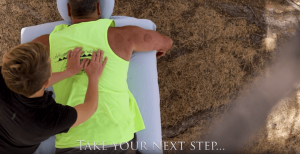
The definition of Massage therapy is scientific manipulation of the soft tissues of the body for the purpose of normalizing those tissues. To do this a massage therapist will use different modalities (techniques):
- Swedish
- Acupressure
- Lymphatic
- Trigger Point/NMT
- Myofascial
- Craniosacral
- Reflexology
- And many others!
The modality used depends on the client’s needs and physical condition. Different issues, such as rehabilitation or relaxation, require different techniques of massages.
Let’s Take It A Step Further – Neuromuscular Therapy
Neuromuscular therapy is soft tissue manipulation with the aim to treat the underlying cause of chronic pain through static and consistent pressure. It involves the nervous, muscular, and skeletal systems and promotes the rebalancing of the body through relieving muscle tension. It addresses trigger points, circulation, nerve compression, postural issues, and biomechanical problems that can be caused by repetitive movement injuries.
Shiny Happy People
Massage Therapy is recognized amongst the highest rated careers for fulfillment and satisfaction! Therapists are likely to provide massage therapy in several settings, including their home, spa/salons, healthcare setting, or pursuit of other endeavors. Plus, a large percentage of people find their Massage Therapy Career later in life!
A Day In The Life
Every day massage therapists:
- Talk with clients about their symptoms, medical history, and treatment goals
- Evaluate clients to locate problem areas of the body
- Manipulate muscles, tendons, ligaments, and other soft tissues of the body
- Increase range of motion through joint mobilization techniques
- Provide guidance on stretching, strengthening, overall relaxation, and body mechanics
- Document each client’s conditions and progress
- Clean their workspace and sanitize equipment
- Create a relaxing environment for clients
Job Statistics and Outlook for Massage Therapy
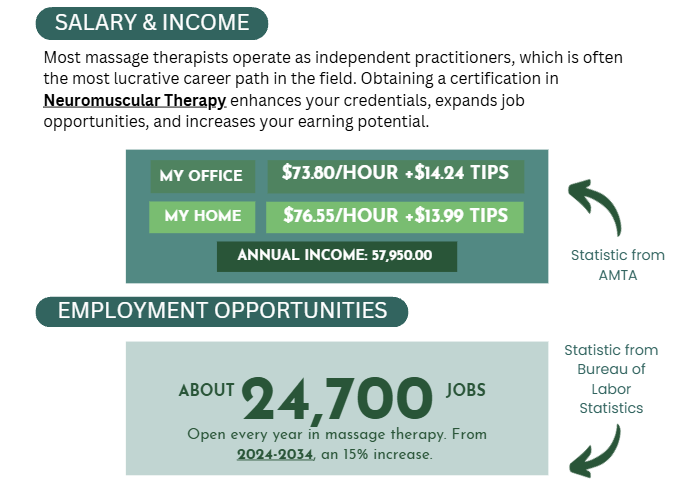
Per the Bureau of Labor Statistics, massage therapists held about 155,400 jobs in 2025. Some of the largest employers of massage therapists are:
- 36 % Self-employed workers
- 33% Personal care services
- 12% Offices of all other health workers
- 7% Offices of chiropractors
- 6% Accommodation
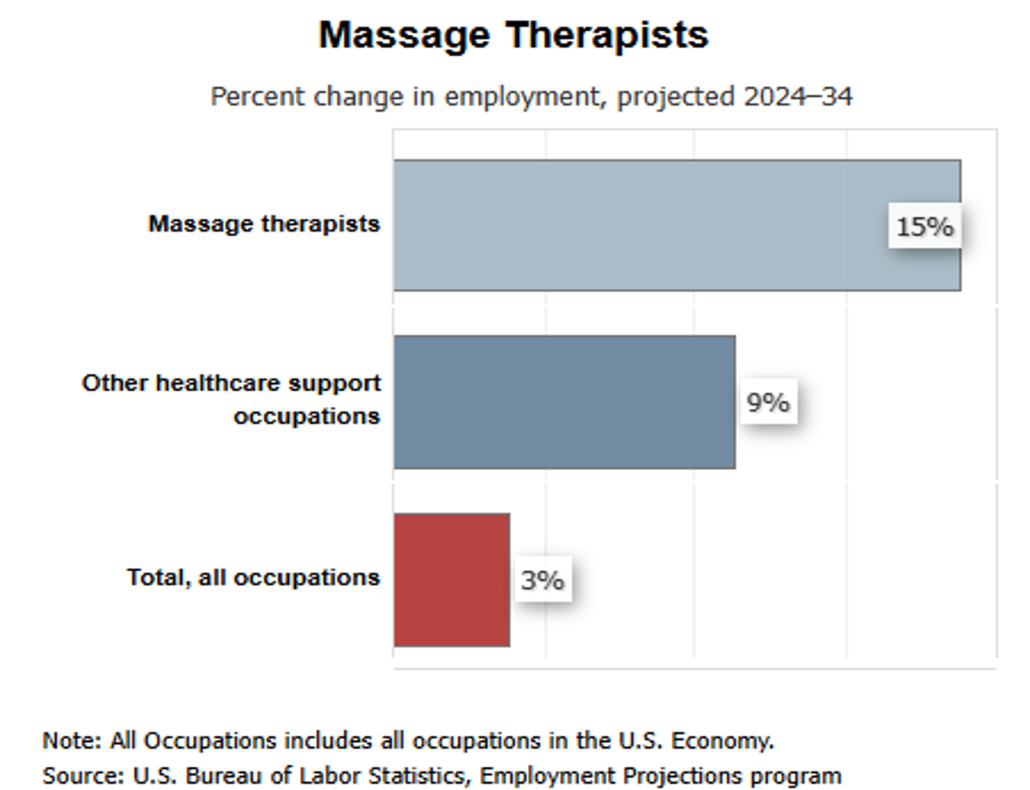
Massage employment is projected to grow 15 percent from 2025 to 2035, much faster than the average for all occupations. This growth is because massage does much more than help relieve stress and increase relaxation, it is recognized as a natural and safe treatment method for managing pain. Demand for massage therapists is expected to increase as more people look to massage to maintain overall health and well-being.
How to Become a Massage Therapist
To become a massage therapist in Colorado, you will need:
- High school Diploma or an equivalent
- Complete a Massage Therapy program of at least 650 hours
- Pass the Massage & Bodywork Licensing Examination (MBLEx)
- Background check and Fingerprinting by the CBI
- Malpractice Liability Insurance
- Apply for license with DORA
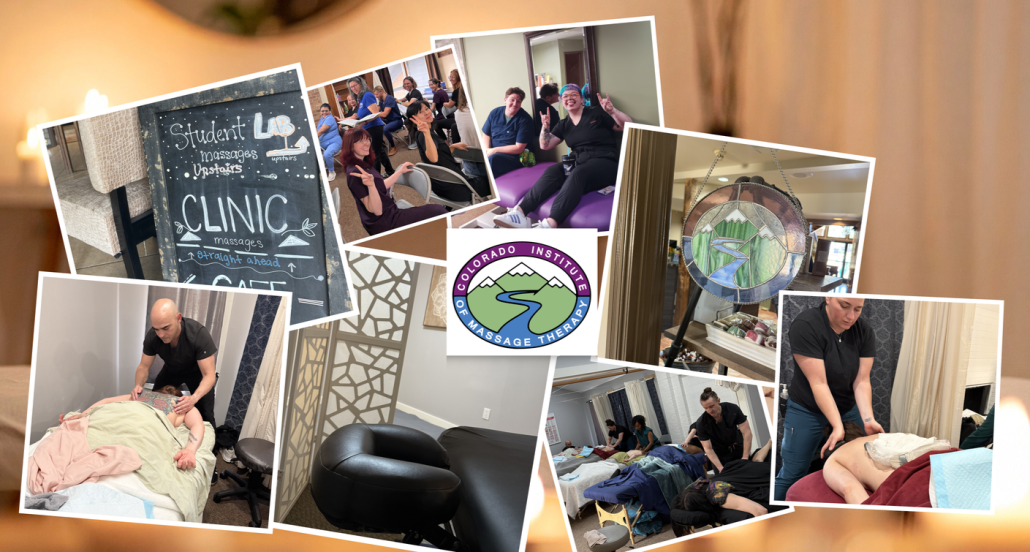
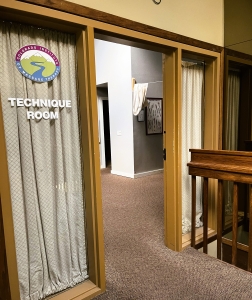
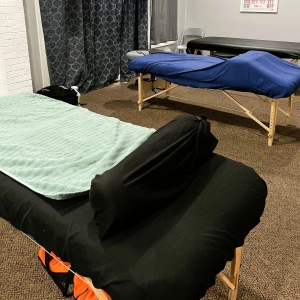
If you want to learn more about this rewarding career, you have come to the right place! Opened for over 40 years, Colorado Institute of Massage Therapy is the longest standing massage therapy school in Colorado. We are accredited by COMTA and are the only school in Colorado offering the Advanced Neuromuscular Certification as part of our curriculum. We are here to help you navigate your way to becoming a licensed massage therapy. If you are looking for more information about our program, school, or massage therapy as a career, register for our monthly Introduction to Massage Therapy Workshop or schedule a time to come in for an In Person Tour to see our school! We are here to help!


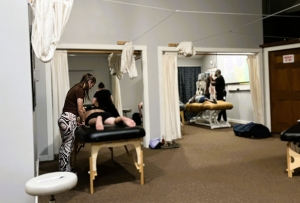
 If you’re exploring a career in massage therapy, you’ll discover there’s more to the it than relaxation. Many massage therapists work with people experiencing chronic pain, recovering from injuries, or looking to improve how their bodies move and feel every day.